Showing posts with label FPIC. Show all posts

Thursday, 2 October 2014

WCIP Concludes in New York with Adoption of Outcome Document

After nearly four years of negotiations marked by incredible efforts and occasional drama, the High Level Meeting of the General Assembly known as the World Conference on Indigenous Peoples (WCIP) was finally held on 22-23 September 2014 at United Nations headquarters in New York. Although it ended with more of a sigh than a shout, it was a sigh of hope for better things to come.

The Outcome Document
The main result of the WCIP is the adoption by the UN General Assembly (UNGA) of the Outcome Document, which among other things reaffirms UN member states' support for the United Nations Declaration on the Rights of Indigenous Peoples (UN Declaration). The Outcome Document addresses a variety of issues aimed at facilitating the implementation of the UN Declaration, including with regard to (1) obtaining free, prior and informed consent of indigenous peoples; (2) increasing their participation in the UN system; and (3) respecting indigenous peoples' role in and right to development. Additionally, the Outcome Document also includes a footnote reference to the Alta Outcome Document, developed by Indigenous Peoples during a preparatory conferenceheld in Alta, Norway from 10-12 June 2013.

FPIC: States committed to obtaining the free, prior and informed consent of indigenous peoples: (1) before adopting and implementing legislative or administrative measures that may affect them (para. 3); and (2) prior to the approval of any project affecting their lands or territories and other resources (para. 20).

UN System: States invited the Human Rights Council to review the mandates of its existing mechanisms, particularly the Expert Mechanism on the Rights of Indigenous Peoples, to facilitate achievement of the ends of the UN Declaration (para. 28). They requested the Secretary General to begin the development of a system-wide action plan to ensure a coherent approach in achieving the ends of the UN Declaration and to report on progress made at the UNGA's seventieth session in 2015 (para. 31).  Additionally, States requested the Secretary General to report on the progress of implementation of the Outcome Document at the seventieth session (para. 40). States also committed to considering ways to enable participation of indigenous peoples in the UN at the seventieth session (para. 33).

Development: States encouraged Governments to recognize the significant contribution of indigenous peoples to the promotion of sustainable development (para. 34), committed to respecting these contributions, including knowledge obtained through traditional practices (para. 35), and noted that indigenous peoples have the right to determine and develop priorities and strategies for exercising their right to development (para. 37).

Alta Outcome Document: One subject of debate during the consultations was whether and how to refer to the Alta Outcome Document in the WCIP Outcome Document. Discussion centered on whether to refer to it by footnote or to include it as an annex. Some States objected to including it as an annex because of concerns regarding the precedent that annexing a document developed outside of the UN structure would set (despite the fact that precedent does exist for such action).

On the other hand, the Alta Outcome Document was strongly supported by the Global Coordinating Group and the regional indigenous caucuses, and many States also supported its inclusion as an annex. As the regional representative for the African Caucus stated, the Alta Outcome Document was actually the document that indigenous peoples wanted to come out of the WCIP. Ultimately, however, the Alta Outcome Document is referred to by footnote in the Outcome Document.

Other issues: The Outcome Document addresses several other issues of critical importance to indigenous peoples, including the rights of indigenous peoples with disabilities (para. 9), disaggregation of data (para. 10), education (para. 11), empowerment of indigenous youth (para. 15), empowerment of indigenous women (para. 17); establishment of national processes relevant to the rights of indigenous peoples pertaining to lands, territories and resources (para. 21), and the responsibility of transnational corporations and other business enterprises to respect all applicable laws and international principles (para. 24).

In general, the response to the Outcome Document has been one of guarded optimism. There appears to be general agreement that at the very least, the Outcome Document does not diminish any of the rights set forth in the UN Declaration, and indeed has the potential to facilitate the achievement of its ends. As with so many other instruments agreed at the international level, however, the challenge remains one of implementation. Many people involved in the process have seen promises made at the national, regional and international level that have not been kept at the local level. That is why the commitments made in the Outcome Document regarding reporting at the seventieth session of the UNGA are so important.

The Negotiation Process
Apart from the Outcome Document itself, another important aspect of its development was the process of negotiations leading up to the adoption of the Outcome Document. Throughout, the process was fraught with difficulty, and many States manoeuvred to reduce the level of participation of indigenous peoples in the development of the text. This manoeuvring played a role in the North American caucus ultimately deciding to withdraw completely from participating in the WCIP.

Nevertheless, during the consultations held in the months prior to the WCIP, the caucus system utilised by indigenous peoples proved to be an effective one. That system consisted of representatives from all the major regions of the world, as well as a youth caucus and a women's caucus, headed by a Global Coordinating Group to deliver unified positions. The caucus representatives negotiated on equal footing with governments during the consultations, joining together to form unified positions or responding individually as needed in the context of discussion. States also consented to allowing the two indigenous advisers chosen to help lead the negotiation process to participate in the development of the draft Outcome Document after the official consultation process ended.

Conclusion
The WCIP marks an important milestone in the long road toward full recognition of indigenous peoples' rights. The Outcome Document is progressive, with several commitments by States to take action in implementing the principles of the UN Declaration. Its adoption serves as a potential catalyst for meaningful change, and it is up to governments now to ensure that they adhere to their commitments and see they are fulfilled at the local level.


Wednesday, 2 July 2014

Developing FPIC Guidance for Oil Palm Companies

Indigenous community representative from West Malaysia.
Though not without its critics, the Roundtable on Sustainable Palm Oil (RSPO) is an important forum for developing voluntary certification standards and has the potential to tip the balance of the industry in favour of a more viable path for conservation and people, alongside economic development.

In 2008, Forest Peoples Programme published a guide to free, prior and informed consent (FPIC) for RSPO member companies. With the recent revision of the RSPO's Principles and Criteria, Forest Peoples Programme is accordingly updating the FPIC guidance in collaboration with Natural Justice and other members of the new Human Rights Working Group. As part of this process, the first of two stakeholder consultation workshops was held in Kuala Lumpur, Malaysia, from 30 June to 1 July. The objectives of the meeting were:
  • To listen to the views of all parties on what constitutes a successful process for recognising the right of indigenous peoples, local communities and other users to give or withhold their FPIC to land acquisition for the establishment of oil palm plantings;
  • To learn lessons from communities, companies, auditors and NGOs and from Social Impact Assessments, complaints and dispute resolution about what has and has not worked;
  • To contribute insights into how the RSPO Guide for Companies on FPIC can be strengthened; and
  • To examine more broadly FPIC in relation to the planning and establishment of oil palm holdings, including the possibility of joint ventures with communities, communities leasing lands, communities as smallholders and other options.
Participants included representatives of Indigenous peoples from West Malaysia, Sabah, and Sarawak, supporting NGOs, oil palm companies, and RSPO Secretariat staff. Holly Jonas (Natural Justice) presented on FPIC in international law. The outcomes of this and the second workshop in Jakarta (to be held in late July) will be incorporated into the revised guidance, release of which is planned for the next RSPO Roundtable in November. For any questions, please contact holly (at) naturaljustice.org.

Monday, 3 February 2014

Community Forestry and REDD+ in Latin America

A recent publication “Lessons Learned from Community Forestry in Latin America and their Relevance for REDD+” by the Forest Carbon, Markets and Communities assessed decades of community forestry in the region and the significance for REDD+. Community forestry recognises the rights of communities to establish and enforce rules governing forest use and access and has been particularly successful in the Latin American region.

Some key findings from community forestry for REDD+ included:

Empowerment of Communities: The recognition of the rights and responsibilities of communities to establish and enforce rules regarding forest access and use, which is supported by tenure rights and clear legal frameworks for communities. Suitable approaches to empower communities include free, prior and informed consent (FPIC) and tools such as community protocolswhich can put communities in the driving seat and create conditions for “doing”.

Governance and Stakeholder Engagement: Self-generated community institutions are generally more effective and should be encouraged. Supportive sectorial polies in areas such as agriculture and macroeconomics are important as are reforms that empower communities. Identifying and applying legal instruments that empower, promoting rights-based approaches and recourse mechanisms are also crucial.

Benefits and Incentives: A review of payment for Ecosystem Services (PES) schemes in the region indicated that PES is generally subsidised and that administering payment schemes can entail high transaction costs. The benefits that communities receive need to be greater than the transaction, management and opportunity costs.

Scaling Up: Scaling up local best practices is important and in Latin America social movements have tended to generate the best systems. The authors recommend supporting locally generated development plans and add that community-based mapping can be important.

Other important lessons include capacity building and sustainability, the latter is enhanced by community managers being decision-makers, titled collective tenure rights, and strong community institutions.

The Latin American publication complements a similar report published for Africa and a global overview brief. The potential role that Community Protocols in REDD+ has been explored in a Natural Justice brief which can be downloaded here.

Thursday, 7 November 2013

New Research Questions Effectiveness of RSPO Standards

"Members of the Roundtable on Sustainable Palm Oil (RSPO) are violating the rights of indigenous peoples and local communities in the forests and peatlands of tropical nations worldwide, according to a new research publication released today. The study details the performance of 16 oil palm operations, many run by RSPO members, reporting on their failure to uphold human rights and environmental standards required.

'Since its founding eight years ago, the RSPO has adopted good standards, but too many member companies are not delivering on these paper promises,' said Norman Jiwan, Executive Director of Transformasi Untuk Keadilan Indonesia, a human rights organisation based in Jakarta. 'The RSPO could still meet this challenge if it provides remedies for member companies’ impacts on communities, but for that we need much stricter enforcement. The organisation’s very credibility is at stake.'

The book 'Conflict or consent? The oil palm sector at a crossroads' details cases in which palm oil producers have failed to obtain permission from communities - a process required by the RSPO based on the UN mandate that is known as free, prior and informed consent. The findings also support accounts of the destructive impact that the palm oil developments are having on indigenous peoples and local communities." To download the report, edited by Marcus Colchester and Sophie Chao (Forest Peoples Programme), and related materials, please visit: http://www.forestpeoples.org/press-room.

Source: Forest Peoples Programme Press Release, 6 November 2013

National Conference on Indigenous Peoples' Land Rights Held in Sabah, Malaysia

Credit: Colin Nicholas
From 6-7 November 2013, a national land conference was held in Sabah, Malaysia, to further explore Indigenous peoples' land rights following from the National Land Inquiry report of the Malaysian Human Rights Commission (SUHAKAM). The conference was organised by Jaringan Orang Asal SeMalaysia (JOAS, the national Indigenous peoples' network of Malaysia) and Partners of Community Organisations (PACOS Trust) with the support of the Rainforest Foundation Norway and Rainforest Action Network.

The conference included several expert presentations, panel discussions, and a resolution based on a number of constructive recommendations suggested by participants. Topics addressed included, among others: Indigenous peoples' rights in international law (with particular emphasis on self-determination and free, prior and informed consent), jurisprudence on Indigenous peoples' land rights, issues with conflicting claims in forest reserves, conservation areas and palm oil plantations, and mechanisms for redress and remedy such as tribunals, national commissions, and compensation schemes. For detailed real-time coverage of the conference, please visit JOAS' Facebook page and Twitter feed. Additional coverage is available in Free Malaysia Today.

Thursday, 24 October 2013

Seminar on Human Rights and Environment

The Asia Europe Foundation had its 13th Informal ASEM Seminar on Human Rights from 21 - 23 October 2013 at Copenhagen, Denmark. This year has an interesting theme for discussion on “Human Rights and The Environment”. Around 140 participants including diplomats, members of national human rights institutions, lawyers, journalists and civil society representatives from 49 countries have participated in the three day seminar on human rights and environment. The seminar was inaugurated by the Environment Minister of Denmark. The seminar has four working groups to discuss in detail on the following areas such as

i) The interaction between sustainable development, environment and human rights 

ii) Access to Information, Participatory Rights and Access to Justice, 

iii) Actors, Institutions and Governance, 

iv) Climate Changes and Human Rights Implication 

Sankar Pani of Natural Justice participated in the event and actively contributed in the working group on Access to Information, Participatory rights and Access to Justice. There has been an intensive discussion on integrating environmental rights with human rights and environment defenders/activist to be treated at par with human right activist, so the protection measures available for human rights defenders should be extended to environmental activists. Many points were also emerged in regard to Free Prior Informed Consent and how this can be enforced for every project which has some social and environmental impacts. It is also important to take necessary measures so that the indigenous community can participate actively in the FPIC process and can have a say on the project. There has been also reference to the Aarhus Convention and how the spirit of the convention can be incorporated into the legal frame work in Asian Countries

Rights-Based REDD+ Dialogue II: Realizing REDD+ Safeguards


Natural Justice together with the Heinrich Böll Foundation and the Indigenous Peoples of Africa Co-ordinating Committee hosted the Rights-Based REDD+ Dialogue II: Realizing REDD+ Safeguards, on 18-19th October 2013 in Cape Town South Africa. This was the second of such dialogues, the first was held in November 2012. Reducing Emissions from Deforestation and Forest Degradation (REDD+) is a mitigation policy under the United Framework Convention on Climate Change (UNFCCC). The REDD+ safeguards are mechanisms designed to reduce identified risks and prevent undesirable outcomes of REDD+ and some also aim to enhance the positive environmental and social impacts of REDD+. 

REDD+ stakeholders from civil society organisations, Indigenous Peoples, government, United Nations, and REDD+ project developers participated in the dialogues. The dialogues began discussing national REDD+ programmes in Southern and Central Africa, with a country focus on activities in Zambia and the Democratic Republic of Congo. A REDD+ project session scrutinised existing REDD+ projects in Africa and heard a project developers perspective on REDD+. Indigenous Peoples engagement in REDD+ was explored and lessons from global case studies discussed. Strategies and tools to engage in REDD+ including the potential of Biocultural Community Protocols as a tool to enhance free, prior and informed consent were considered. The on-going World Bank Safeguards Review process was highlighted and its relevance to REDD+ examined. Governance issues were discussed with a focus on the role of independent monitoring. The final sessions explored ways to positively influence the REDD+ safeguards at the international level and discussed messages for the Warsaw Climate Change Conference UNFCCC COP19.

Thursday, 30 May 2013

World Bank Steps Up Discussions with Indigenous Groups at this Year's UN Permanent Forum on Indigenous Issues

Photo Credit: UNPFII
During this year’s Permanent Forum on Indigenous Issues the World Bank engaged with Indigenous Peoples in a number of formal and informal sessions. Formally these engagements took place during plenary sessions of the Permanent Forum and informally during side events and organized dialogues. The size of the World Bank's team attending the Forum, which came up to 30 people in comparison to just a handful during last year's event, demonstrates the increased relevance the institution places on recognizing indigenous peoples as an important constituent in its work. 
The World Bank’s most important item of engagement was the review process with respect to its social and environmental safeguards that the World Bank is currently undertaking, which include a policy on indigenous peoples (Operational Policy 4.10). As the current policy was drafted in 2005, many of the numerous comments made by Indigenous Peoples during the discussions related to a demand to bring the policy in line with the UN Declaration on the Rights of Indigenous Peoples (UNDRIP 2007), including the right to free, prior and informed consent (FPIC). Furthermore, representatives called on the World Bank to not only examine the impact of UNDRIP on OP 4.10 but on all of the Bank’s policies.  It was highlighted that the importance of updating OP 4.10 cannot be overestimated, as in 2012 alone the safeguards were triggered by 20% of all World Bank projects, not including projects where they potentially should have been triggered but were not.

Newly appointed Senior Advisor for Indigenous Peoples and Ethnic Minorities, Luis Felipe Duchicela of the World Bank, responded to the criticism, highlighting that while OP 4.10 recognizes human rights the Bank is willing to take UNDRIP into account as part of the overall safeguard review process it is currently undertaking. However, he noted, in the end the World Bank’s board comprised of governments will have to approve any safeguards review and it was not up to the institution alone to implement such change.
Duchicela furthermore announced the founding of a World Bank advisory council made up with Indigenous People in the near future. He formally asked the Permanent Forum to help support the World Bank in setting up such a council as well as engaging in ongoing dialogue with Indigenous Peoples. 
Permanent Forum members responded to this request by indicating their willingness to support the Bank in this process. However, they highlighted the need to also involve the two other UN mechanisms working on indigenous issues, namely the Expert Mechanism on the Rights of Indigenous Peoples (EMRIP) and the Special Rapporteur on the rights of indigenous peoples, a position currently held by Professor James Anaya.
An additional dialogue took place with representatives of African indigenous representatives as well as representatives of IPACC and Eli Makagon, Lesle Jansen and Johanna von Braun from Natural Justice, during which the World Bank requested feedback from participants on how future dialogues with Indigenous Peoples from the African continent should take place.  Participants highlighted the need to split such consultations into sub regional engagements in North, Southern, East, West and Central Africa and provide for the different language groups on the continent. Participants also emphasised that information on such dialogues will have to be announced sufficiently in advance, unlike the previous dialogues that the World Bank conducted in the ongoing safeguards review process. Participants highlighted that such dialogues would be very important especially given the recent World Bank announcement of a 1 billion USD grant for the Central Lakes region in Africa, nearly half of which will be directed to hydro-power facilities.

Thursday, 25 April 2013

"FPIC and the Extractive Industries: A Guide to Applying the Spirit of Free, Prior and Informed Consent in Industrial Projects

The International Institute for Environment and Development has published a resource on free, prior and informed consent (FPIC) as it relates to extractive industries. FPIC and the Extractive Industries: A Guide to Applying the Spirit of Free, Prior and Informed Consent in Industrial Projects points out that corporations are increasingly aware of the need to secure and maintain a ‘social license to operate’ because implementing a project without the support and trust of local communities can lead to operational delays, financial costs and litigation; even project closure, violence and loss of life. The Guide is targeted primarily at companies, and those working with them, who are looking to engage with FPIC in a meaningful way. It advocates respect for communities’ customary practices, and sets forth a three-point framework for companies to follow that seeks to move companies beyond compliance with minimum standards to achieving the spirit of FPIC with all communities. Among the resources for “flexible systems for participation and deliberation [that] will provide companies with guidance on how to achieve the spirit of FPIC” the Guide lists the Biocultural Community Protocol Toolkit developed by Natural Justice for community facilitators. The publication can be found here. 

Tuesday, 26 March 2013

Our Forests, Our Life! Indigenous Peoples and REDD+ Video

The central role that indigenous peoples should play within Reducing Emissions From Deforestation and forest Degradation (REDD+) is highlighted by a new community friendly video ‘’Our Forests, Our Life! Indigenous Peoples and REDD+’ released by Asia Indigenous Peoples Pact (AIPP).

The production explains how industrialisation has led to global warming and climate change, and that the global demand for forest products is resulting in deforestation. The international agreement to slow and eventually halt forest loss under the REDD+ mechanism within the United Nations Framework Convention on Climate Change (UNFCCC) is introduced.

The video outlines the relevance of the United Nations Declaration on the Rights of Indigenous Peoples (UNDRIP) to REDD+, and the right to Free, Prior and Informed Consent (FPIC). It is explained that REDD+ is not fixed and that each country will adapt REDD+ to its particular conditions, therefore the full and effective participation of Indigenous Peoples is essential in all phases of REDD+. The need to include the contribution and participation of indigenous women as equals within the REDD+ process is also highlighted.

This is an excellent educational resource and complementary to the REDD+ e-module.

Friday, 1 March 2013

Submission to the UN Global Compact on Practice Note on FPIC

On 1 March 2013 Natural Justice submitted a letter to the United Nations Global Compact, commenting on their Draft Practice Note on Free, Prior and Informed Consent (the draft practice note can be found here). The concept note aims to identify key issues that companies should consider in appropriate engagements with indigenous peoples.

Natural Justice’s submission sought to clarify elements of the draft practice note, bringing it into line with international human rights and environmental legal principles found in instruments such as the Declaration on the Rights on Indigenous Peoples, the Convention on Biological Diversity, the Nagoya Protocol and the UN Guiding Principles on Business and Human Rights as well as the work of the Special Rapporteur on the Rights of Indigenous Peoples, the Special Rapporteur on Extreme Poverty and Human Rights, the Permanent Forum on Indigenous Issues and the Expert Mechanism on the Rights of Indigenous Peoples and international jurisprudence such as the Centre for Minority Rights Development (Kenya) and Minority Rights Group International on behalf of Endorois Welfare Council v Kenya and Saramaka v. Suriname.

Global Compact was urged to:
1. Amend its practice note to reflect international standards, by specifying the obligations of states to respect the rights of indigenous peoples to free prior and informed consent with respect to projects and decisions that are likely to affect them;
2. Amend its practice note to reflect a company’s obligation to apply and respect internationally recognized human rights (such as the Declaration on the Rights of Indigenous Peoples), and to honour these rights where there are conflicts with domestic laws.

This and other submissions are available here.

Wednesday, 13 February 2013

Document Reveals Gas Company Plans for Manú National Park

Via guardian.co.uk
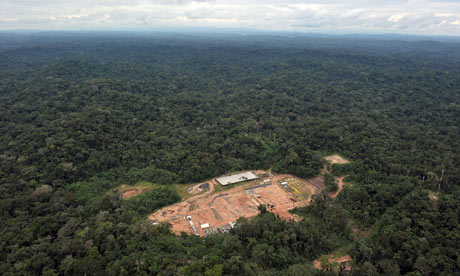
A new document reveals Pluspetrol interests in the gas reserves of Manú National Park in the Peruvian Amazon. Unesco considers the  park's biodiversity to exceed that of any other place on Earth. The national park is also home to Indigenous peoples with no regular contact with outsiders. The document is entitled “Research Plan for Geological Exploration and Surface Geochemistry in the Manú National Park and its Buffer Zone” and was produced by the consultancy Quartz Services on request by Pluspetrol. 

The document acknowledges that Peruvian law prohibits extractive operations in national parks. However, the document suggests that Quartz could “contribute not only to the continuation of activities in Lot 88 (a gas concession already existent), but also to the development of the Manú National Park protected area.”

Read more about the document in The Guardian here. 

Monday, 11 February 2013

Major Court Victory for Tana River Delta Communities

Photo via www.facebook.com/pages/Kenweb
In a significant victory for community land rights, the Kenyan High Court Judge Mumbi Ngugi has ruled that all land use plans for the Tana River Delta must be developed with the full participation of local communities. The Court also ordered that the Tana and Athi Rivers Development Authority must share current short and long term land use plans and that plans will be periodically reviewed. The ruling is a major triumph as tens of thousands of hectares of multi-use floodplain would have been converted for sugar cane production under the current plan and many residents of the Delta were to be removed. 

The case was brought by representatives of farmers, fishermen, pastoralists and conservation groups in the Tana River Delta and sought to halt large-scale commercial developments in the Tana River Delta until a master plan was developed. They were supported by the Kenya Wetlands Biodiversity Research Team with funding from the East African Wildlife Society and Nature Kenya. 

Read more about the ruling from the East African Wildlife Society’s press release here and the Business Daily here.