Monday, 11 June 2012

Borana BCP Training

From 5-7 July, Natural Justice and Kivulini Trust facilitated a biocultural community protocol (BCP) training workshop for the Borana pastoralist community of the Waso Rangelands, Kenya. The increase in development projects, wildlife conservation areas and influx of other groups in Waso has contributed to the loss of the Borana’s traditional lands and diminished grazing areas for their livestock. This continued loss has led to a slow decline in their traditional institutions, customs and norms as members of the community are forced to choose other livelihood options. This change has also negatively impacted the biodiversity in the area, which was conserved and sustainably used by the communities through their traditional pastoralist practices. 

The BCP training in Waso was attended by a number of the community members, including elders, women, youth and NGOs supporting the community. The BCP process, or Fin Jiru Gumi Waso (Wellbeing of the Waso Community in KiBorana), will combine with a number of ongoing projects in the region which seek to protect the community’s resources and culture. The process will highlight the community’s customary laws and norms around biodiversity conservation, inform the community of their relevant international and national biocultural rights, establish representative bodies to dialogue with government or private enterprises interested in utilizing the resources and/or traditional knowledge on their traditional lands, and create a platform for discussion with neighbouring communities in the interest of peacebuilding. This initiative is supported by the Christensen Fund.

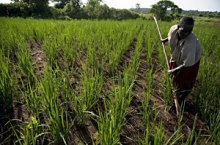
Final FAO Voluntary Guidelines on Tenure

Farmer in Uganda. Photo via fao.org
The Committee on World Food Security (CFS) endorsed the ‘Voluntary Guidelines on the Responsible Governance of Tenure of Land, Fisheries and Forests in the Context of National Food Security’ on 11 May.  The process of developing the guidelines was initiated by the Food and Agriculture Organisation (FAO) of the United Nations in 2009 and was finalised by CFS lead negotiations involving governments, civil society, the private sector, international organisations and academia. CFS chairperson Yaya Olaniran described the guidelines as "the product of a three year, inclusive process of consultations and negotiations that brought together many stakeholders and ensured that a wide range of voices were heard…The result is that we have a meaningful series of principles and practices that everybody — countries, the private sector, farmers, civil society — can stand behind and support, and that will work out in the real world." 

The guidelines encourage increased recognition of informal tenure systems, ensuring tenure administrative systems are affordable and accessible, managing restitution for those illegally evicted from their lands in the past, ensuring the rights of indigenous communities, increasing transparency in agricultural investments, supporting effective and equitable dispute resolution around land tenure, and addressing increased urbanisation. Looking forward, implementation will depend upon governments which participated in the negotiations. 

The guidelines can be downloaded here and an informal aid for reading the guidelines can be found here. FAO’s press statement upon the adoption of the guidelines is here

Friday, 8 June 2012

New RRI Report on Forest Tenure Rights

With over 50 new laws passed to protect forest tenure rights and an increase from 10-15% to 21-31% of forest owned or controlled by Indigenous Peoples and forest communities from 1992 to today, there has been significant progress. This is not only a significant advance for communities, it also strengthens conservation as community managed forests outperformed public protected areas in preventing deforestation. Unfortunately, much of this progress has come in a few countries, most of them in Latin America. Most countries lack effective protections for the tenure rights of communities. While there is increased recognition of traditional land tenure rights, much of this recognition has had limited impact. Increased large-scale land acquisitions threaten to further undermine tenure security. 

In this context, the Rights and Resources Initiative has prepared a new report to take stock of the progress made since the 1992 Earth Summit in Rio de Janeiro’s commitment to sustainable development. The report includes specific examples from China, Brazil, India, Nepal, Cameroon and Mexico. 

The report can be downloaded here. The summary can be found here.

Thursday, 7 June 2012

Special Rapporteurs Warn on Large-Scale Land Acquisitions

In Meruake, Indonesia, 1-2 million hectares of rainforest and small-scale farming plots are being converted into export-led crop and agrofuel plantations, potentially impacting the food security of up to 50,000 people. Three thousand hectares of land in the Isabella region of the Philippines has already been converted to sugar cane production for agrofuels, with a further 8,000 hectares being targeted. These developments are part of a broader trend in South East Asia towards increased large-scale land acquisitions for producing biofuels. 

In response to these acquisitions, UN Special Rapporteur on the right to food, Olivier De Schutter, and UN Special Rapporteur on the rights of indigenous peoples, James Anaya, have urged governments to “step up their vigilance in regard to large scale acquisitions to ensure that the fundamental rights of these communities are not violated, be they small-farmers, fishers, hunters, foragers or craftsmen.” The experts warned that "converting bio-diverse forest land to intensive monocropping can entail wide environmental impacts, from the loss of forest-dwelling game species in Meruake, to reduced resistance to flooding and landslides in Isabela….we must also be sensitive to the impacts of sudden influxes of workers on local food access, traditions and ways of life.” They further argued that “development is not always the outcome, however many jobs and export dollars a project promises to yield…new economic opportunities, and new, more intensive uses of land, must not be at the expense of the human rights of local populations.” 

Read more about their comments here. Read more about Special Rapporteur Anaya's work here. Read more about Special Rapporteur De Schutter's work here

Monday, 4 June 2012

Roundtable on the Green Economy in Africa

On 1 June, Natural Justice participated in a roundtable discussion on the prospects and challenges around an inclusive and pro-poor, natural resource-driven green economy in Africa in Johannesburg, South Africa. The roundtable, organised by the Open Society Initiative for Africa, Heinrich Boell Foundation and One World, brought together policy makers, researchers, civil society and practitioners to contribute to the debate on the green economy, define some of the policy questions and responses needed for the region, and to support key African actors to champion an inclusive, pro-poor green economy. 

Natural Justice presented on its experiences with communities that have interacted with the green economy through mechanisms such as Access and Benefit Sharing and Reducing Emissions from Deforestation and Degradation (REDD). The presentation emphasised that much can be learned from the traditional stewards of the lands, waters and resources, such as some of the Indigenous communities in Namibia, who have been able to maintain some of the most biodiverse areas in the world. 

Find further information on Natural Justice work on the green economy here.

Sunday, 3 June 2012

New Report on Southern Voices on Climate Change Policy

On 21 May, the Southern Voices Capacity Building Programme launched a new report, “Southern Voices on Climate Policy Choices – analysis of and lessons learned from civil society advocacy on climate change,” in Bonn, Germany. The report considers advocacy groups’ ability to influence climate change policy at the international, regional, national and local levels. It is based on more than 70 case studies and considers civil society's impact on legislation, policy and implementation. 

The report includes contributions from more than 20 networks, and their members, of the Southern Voices Programme and was edited by Dr Hannah Reid of the International Institute of Environment and Development and a team of Southern Voices experts. It is published by the Climate Capacity Consortium. 

The full report, along with summaries in French, Spanish and English, can be downloaded here

Friday, 1 June 2012

Indian Law Centre Principles on REDD+

Photo via the Indian Law Centre
The Indian Law Centre has released new principles focused on the intersection of international law, indigenous rights and Reducing Emissions from Deforestation and Degradation (REDD+). The principles seek to stimulate further discussions on how REDD+ can be implemented with a human rights-based approach. 

The Centre has been advocating on REDD+, which seeks to compensate developing nations which reduce their rate of emissions from deforestation, and considering its potential benefits and challenges to the advancement of the livelihoods and rights of indigenous peoples and local communities. The Centre has expressed particular concern on the limited protections for indigenous peoples in planned REDD+ programmes to be implemented by the World Bank, the United Nations UN-REDD Programme, and others. The Centre recommends improved policies to ensure that these programmes operate in accordance with the United Nations Declaration on the Rights of Indigenous Peoples and other instruments of international law which protect the rights of indigenous peoples. 

The principles are entitled the “International Law Principles for REDD+: The Rights of Indigenous Peoples and the Legal Obligations of REDD+ Actors.” The principles can be downloaded here. The Indian Law Centre requests that comments on the principles be emailed to dcoffice@indianlaw.org or feedback shared via their online survey here. Background information on the principles can be found here.